
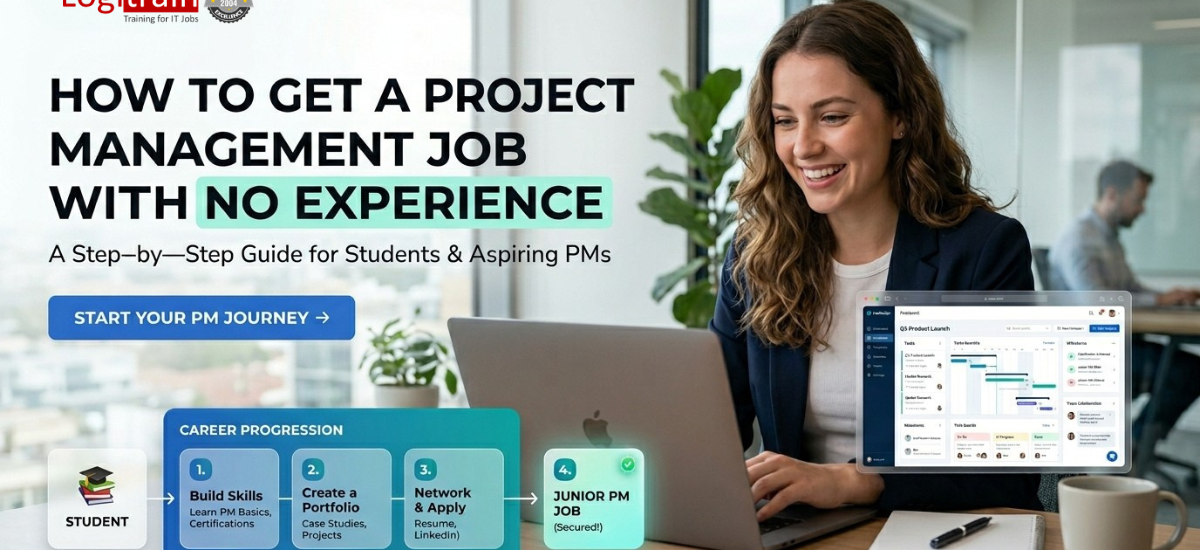
ou can get a project management job without direct experience — but usually not by applying straight for “Project Manager” roles. In Australia, the pragmatic approach would be to begin as a project support professional such as a Project Administrator, Project Coordinator, Project Support Officer, and Junior Project Planner, thereby demonstrating your ability to coordinate tasks, manage stakeholders, follow up on timelines, and deliver. In Australia, vocational programs like the Certificate IV in Project Management Practice relate to project support professionals, whereas the Diploma of Project Management focuses on project leadership. Another entry-level project manager certificate program offered by the Project Management Institute is CAPM, which does not need any experience in project management.
If you are based in Melbourne, Sydney, Brisbane, Adelaide, Perth, or another major Australian city, this matters because employers often hire for delivery support roles first, then promote from within. SEEK listings also show strong volume for Project Coordinator and Project Support Officer jobs across Australian markets.
learn the fundamentals, target the right entry role, build proof through small projects, and choose a course that matches your stage rather than chasing an advanced title too early.
What employers actually mean by “experience” in project management
Many beginners think “no experience” means “no chance.” That is not how hiring usually works.
Employers often look for three kinds of experience:
Delivery experience
Have you helped move work from idea to completion? That can come from admin, operations, customer service, events, IT support, construction support, marketing, or logistics.
Coordination experience
Can you schedule meetings, update reports, chase actions, maintain documentation, or keep stakeholders informed?
Tool and process familiarity
Do you understand status reporting, risks, issues, dependencies, milestones, and project documentation? Tools such as Microsoft Project / Planner and Jira are commonly used to track tasks, timelines, and progress.
That is why individuals enter project management fields from various professions. You may be lacking a project management designation, but you might already possess a skill set for project management.
Which entry-level roles should you target first?
If your goal is a long-term project management career, aim for stepping-stone roles that sit close to delivery.
| Entry role | Best for | What you’ll usually do | Why it matters |
| Project Administrator | Absolute beginners | Minutes, documents, trackers, scheduling | Builds process discipline |
| Project Support Officer | Career changers, government-focused applicants | Governance support, reporting, financial/admin coordination | Good exposure to delivery environments |
| Project Coordinator | Beginners with some transferable experience | Timelines, stakeholder follow-up, status updates, task tracking | Most direct bridge to PM work |
| Junior Project Planner / Scheduler | Analytical candidates | Planning, dependencies, schedule updates | Strong pathway into PMO or infrastructure |
In Australia, Certificate IV in Project Management Practice is designed for roles such as Project Administrator and similar support positions, while the Diploma of Project Management reflects roles such as Project Manager and Project Team Leader.
That means if you have no direct experience, applying only for Project Manager jobs is usually the slowest path.
What kind of project management course makes sense when you are starting out?
Not every beginner needs the same course. Your best option depends on whether you need job readiness, local recognition, or a global certification.
Beginner pathway comparison
| Option | Best for | Experience required | Main advantage | Trade-off |
| Certificate IV in Project Management Practice | First project support role in Australia | None | Built for project support contexts; no entry requirements | More vocational than headline-grabbing |
| CAPM | Career changers and grads wanting a recognised credential | No PM experience required; 23 hours of education needed | Strong foundation in predictive, agile, and business analysis concepts | More exam-focused than workplace-based |
| PRINCE2 Foundation | People targeting structured environments or government-adjacent work | Suitable for any career stage | Clear method and vocabulary; globally recognised | Can feel theoretical without practical examples |
| Diploma of Project Management | Those already leading small projects or teams | No formal entry requirement, but better once you have some exposure | Closer to leadership and end-to-end delivery | Often too much for someone with zero project exposure |
Sources: training.gov.au confirms no entry requirements for both the Certificate IV and Diploma, but the Certificate IV is aligned to support roles, while the Diploma is aligned to leadership and project objectives. PMI confirms CAPM requires no experience and needs 23 hours of professional education. PeopleCert positions PRINCE2 Foundation as suitable for any career stage and as a strong foundation credential.
A smart beginner move is often:
foundation course + practical tool exposure + entry-level application strategy.
How to build “experience” before you get hired
The fastest way to look employable is to create proof, not just collect certificates.
Build a mini project portfolio
You do not need confidential company projects. You can create examples such as:
- a project plan for moving office locations
- an event launch timeline
- a website refresh tracker
- a volunteer project risk register
- a stakeholder communication plan
Practice the tools employers recognise
Learn how to create a timeline, work breakdown, task board, RAID log, and status update using tools like Microsoft Project/Planner or Jira. Microsoft highlights Gantt-style timeline planning and templates; Atlassian positions Jira as a central tool for task tracking, workflows, and project visibility.
Use your current job as evidence
If you manage rosters, coordinate suppliers, organise teams, track deadlines, or support change, you already have relevant stories for interviews.
Best next step: how to choose the right pathway
Use this decision framework:
Choose Certificate IV if:
- you want your first project support job in Australia
- you need practical structure and local job relevance
- you are coming from admin, operations, retail, healthcare, logistics, or support work
Choose CAPM if:
- you want a globally known beginner certification
- you may move across industries
- you are comfortable studying for an exam
Choose PRINCE2 Foundation if:
- you want a structured methodology fast
- you are targeting formal delivery environments, consulting, or public-sector-style project governance
Choose the Diploma if:
- you already lead tasks, vendors, small teams, or internal projects
- you need broader end-to-end project capability rather than just entry access
If you want a practical local starting point, a project management course from a recognised Australian provider such as Logitrain IT Training Australia can make sense when it combines methodology, templates, applied exercises, and job-focused guidance rather than theory alone.
Common mistakes to avoid
- Applying only for Project Manager titles
Start with coordinator and support roles first. - Doing an advanced certification too early
A big credential does not replace demonstrable delivery skills. - Ignoring tools and documentation
Many hiring managers care less about theory than your ability to maintain project artefacts. - Writing a generic resume
Translate your prior work into project language: timelines, stakeholders, risks, reporting, coordination, delivery. - Skipping industry context
IT, construction, healthcare, education, and government all use project management differently.
FAQ
1) Can I become a project manager with no experience in Australia?
Yes, but most people begin in project support roles first, then move into project manager positions over time.
2) What is the best project management course for beginners?
For local entry roles, Certificate IV is often practical; for a globally recognised beginner credential, CAPM is a strong option.
3) Is CAPM worth it in Australia?
It can be, especially for career changers who want a recognised baseline and no-experience-required certification.
4) Do I need PRINCE2 or PMP to get started?
Not usually. PRINCE2 Foundation can help beginners, but PMP is designed for much more experienced practitioners. PRINCE2 Foundation is suitable across career stages. [peoplecert.org]
5) What software should I learn first?
Start with Excel, Microsoft Project or Planner, and a task-tracking platform such as Jira.
6) Which cities have opportunities?
Major markets such as Melbourne, Sydney, Brisbane, Adelaide, and Perth regularly advertise coordinator and support roles.
Conclusion
Breaking into project management without experience is realistic if you stop treating it as a title-first move. The best strategy is to enter through support or coordination roles, choose a course that matches your stage, learn the language of delivery, and build small but credible examples of your work.
If you are unsure where to start, pick one immediate action this week: enrol in a foundation-level course, rebuild your resume around project evidence, or create one sample project portfolio piece. That kind of focused progress is usually what turns “no experience” into “ready for interview.”
